Tuesday, August 6, 2013

Healthy Lifestyle Hint: Why We Talk Ourselves Out of Making Healthy Choices


More and more, healthier messages are all around us, and for many of us, it isn’t so much ignorance as much as self sabotage that keeps us from leading the healthy lifestyle we desire. We all have that inner talk that somehow manages to derail us from our healthy choices. It happens to even the most health conscious people. But why?
It’s as simple as this. Our behavior is most influenced by our feelings. So even though we know intellectually that we should eat healthy, drink a lot of water, get to bed at a reasonable time and make sure we get consistent exercise, it’s our emotions that are determining whether we will follow through or not.
Tips to Help You Follow Through:
  1. Deliberately put yourself in situations that will help you feel like you need to do the healthy things you want to do. For example, you could enter into a fundraising walk. This way, you have commitments that you need to fulfill and therefore you will feel like you have to stick to your trainings. 
     
  2. Keep it simple and make subtle changes. People often fail because they turn the changes they want to make into a complicated task that no one could or would even want to take on. Instead of setting out to exercise everyday and never eat anything unhealthy, start off slow. Add one workout routine to your week to start and cut out one or two foods. Then work up from there. Make it easy on yourself. The harder it FEELS, the more likely it is that your feelings of not wanting to do it will run the show. 
     
  3. Make lifestyle changes, instead of hopping on the next fad diet that promises immediate results. If it’s not part of your lifestyle, it won’t be sustainable and it will only lead to more frustration, not to mention most fad diets are unhealthy (which negates the point of trying to make healthier choices!)

Thank you to Carpe Vita for this insightful article. Visit them at: http://www.carpevitainc.com/


Wednesday, June 19, 2013

Minimizing Job Stress Before It's Too Late

Minimizing Job Stress Before It’s Too Late

Here you are, minding your own business, doing a great job, then someone asks you to perform what amounts to a professional miracle. They have no idea that what they want will require the [insert your job here] equivalent of leaping through flaming hoops, doing backward flips while juggling three apples and eating one of them in mid-air.

The good news is, you come through. You make it work and you deliver the goods, on time and just a little over budget. The "not so good" news is that, just as you're about to exhale and recover from the job-gymnastics routine, three other people call or come over to you and say: "Hey, you're pretty good! Can you come over and do that for me, too?" Only, I need it a little sooner and a lot cheaper."

There is a phrase in Spanish that loosely translates: "By mistake, I killed a dog once-- Now they call me a dog killer." They don't have a phrase for when you work a miracle once. However, if you find yourself in a quandary of how to think about this, Lao-Tzu had a phrase: "If it doesn't kill you first, it will make you stronger."

If you are time-crunched and have to go work another miracle right now, the quick-view, bottom line solution is, pick one of the following choices:
1) Do it superbly, name your price, including number of days off to recover and recharge.
2) Decline it, just say no, you can't do it under any circumstances and maintain personal and professional integrity.
3) Deflect it; don't automatically take their bait. This is to make them look good - not you!
Or
4) Let THEM delegate it to the three other people who should be doing it, even though they aren't as good at it as you are.
Thanks, it's been great. Call me if I can be of any support in the mind/body department. See ya--

If you have a little time, let’s have a deeper discussion about this phenomenon of being a miracle worker.

Deciding to Do the Miracle
Most of us like to do our best work every time, no matter how much time and money it takes. However, often, we find ourselves challenged by time, money, talent, technology or all of it. Here is where you say to yourself, "This is an opportunity for me to grow and learn. Working through this will get me closer to self-mastery. And that's good.

The key to this step is: Just do it –but on your terms, at your price. Then reward yourself for what you learned and accomplished. Take quiet time to self-reflect, for it is in the quiet spaces that the inner self recharges and re-calibrates itself for great contribution next time.

Declining Opportunity.
Don’t do it. If you're having trouble with this part, it may imply that you're new in your career and you're not sure if this one time is going to be the opportunity that could make or break your career, reputation or both. The bottom line is "just say no, can't do it. You don't even have to give a reason why.

If your commitment is to excellence in your work or your job, to say "yes" to this opportunity is also a vote "yes" for mediocrity at your expense. The more you exercise the "no" muscle, the better you will get at it.

Deflecting Opportunity.
Your colleague comes to you and begins to moan and whine about how they're so busy and so swamped, or so professionally challenged that their life is being made miserable because they don't have what it takes to do as good a job as you could do in the amount of time they have. Woe is them…..

That's your cue to say, "Aw, gee, that's too bad. I'm sure that something will work out for you. Thanks for the conversation. See ya later." This opportunity is to make them (your whiner) look good. It's rarely a good clean chance to make you look good no matter how much of a hero they make it sound like you will be if you rescue them our of their predicament.

Lastly, Let THEM delegate this project to the three other people who should be doing this job, even though those other people are not as good as you are or as experienced as you are. Don't make the mistake of agreeing to make sure it gets done, which only means that you have now accepted work that got dumped on you that you either have to do poorly at your expense or delegate it.

Consider the possibility that the reason why more opportunities exist is so more people can take advantage of them, not so that highly competent people can be taken advantage of. If you are a miracle worker, when you do say "yes," make sure it's on your terms for doing excellent work, including your requests for preparation time, ample talent & budget resources, time to do the job, and the opportunity to recover and rejuvenate yourself after a job well done.

Thursday, May 16, 2013

The Emotional Anatomy of Lower Back Pain


The Emotional Anatomy of Lower Back Pain

The Other Side of Low Back Pain
If you find yourself full of joy, with a sense of belonging and fulfillment, your back probably doesn’t bother you that much.  On the other hand, if you’ve been suffering from chronic back pain—or perhaps you have some recent low back pain you can’t ignore anymore—it’s time to look at what’s going on in your life that would manifest itself as your aching back.
The lower back—this is the lower part of the back starting at the pelvis going up to the lowest ribs of the back and also includes the inside front of the hips. 
On the outside of your low back where you might be experiencing your pain, your body transmits the energy of activities you engage in with others.  Many of us in the mind-body medicine professions have a sense of this. 

Back Pain and Core Flexibility
Some of us have the idea that increasing core strength will help resolve chronic pain.
However, only a few of us are aware of the need for core flexibility, especially deep in the front hip muscles.  It is good for the core muscles to be strong.  However, if these muscles lose their flexibility, then the body becomes rigid, which forces our back muscles to work harder and may even cause wear and tear to the joints, all of which can be painful and frustrating.  What gives muscles good tone is a balance of strength and flexibility. 

You need core flexibility in the hips and low back as a foundation for all movement as well as balance for your emotional body. 


Where Passion Lives—The Front of the Hips
The front hip muscles attach to the front of the low back bones, go down through the pelvis and attach to the inside of the upper leg.  Together they lift your legs when you are standing, walking or running.  They also keep your low back upright when sitting. 

This muscle group stores and transmits the energy of your passion and charisma.  We express passion when our heart and soul are actively engaged in meaningful activities and professional pursuits.  There is even something about the activity that reflects and completes something deep inside us.  Sometimes the experience is perpetual, like in one’s relationships or life work.  Sometimes it’s spontaneous and short-lived, like craving chocolate or sharing a special moment with someone.

Time to Reflect
If you are experiencing pain or discomfort in the low back—the question to ask yourself is: “What am I doing that, maybe I used to like doing before, but it’s no longer fulfilling for me? What’s missing now that will give me those warm, fuzzies I really want to enjoy?  What is next for me?” 

A woman was doing some professional growth seminars and got to a point where she accomplished her goals and reached a level of sufficiency by applying the skills and tools she acquired with the organization. Around that time, her back started to hurt.
With Reposturing Dynamics treatment and Reposturing Yoga exercises, we helped her get rid of the low back pain.  Coincidentally she was also completing her agreements with that organization. Lo-and-behold, at the same time the stress of her unfulfilling commitments was eliminated, her back started feeling better. 

Cause and Effect—Flexibility and Freedom
It’s not that there is ever a clear “cause-and-effect” to point to.  What IS evident is that there seems to be a correlation between how our body manifests physical stress and our life choices and activities.

The connection I have found is this: The more flexibility and freedom you give to your front hip muscles, the more passion and pleasure you are able to experience and express.  Remember, the front hip muscles start in the front of the low back.  Therefore, in order to truly help your low back, you must stretch and release tension in the front hip muscles.  When you are no longer passionately engaged in meaningful activity, you may experience low back pain. 

Again, when your back hurts, in addition to the professional help you seek, the questions to ask yourself are, “What activities am I doing just for myself?  Is this still fulfilling for me? Do I still enjoy doing it? Does it produce the results I want in my life?”

Self Care Action Plan
If the answers are no—find a way to complete the unfulfilling agreements you have in place.  You can even decide that you want to have one crowning-achievement by completing that project and move on with the rest of your life.
Of course, seek the care, support, and good advice from health professionals such as chiropractors, physical therapists, and orthopedists.  However, the best self care for low back pain is stretching the front hip and front low back muscles.

The Reposturing Solution
Some of my favorite hip stretches from the Reposturing Yoga DVD are: Standing Quad Stretch, Step-Up Lunge, and Standing Crossover Hip Stretch.  These will get you started toward a pain-free back.

More important, with the self care emotional approach, you may also open the door to even greater happiness in your life.

Friday, April 23, 2010

The Other Side of Low Back Pain

If you find yourself full of joy, with a sense of belonging and fulfillment, your back probably doesn’t bother you that much. On the other hand, if you’ve been suffering from chronic back pain—or perhaps you have some recent low back pain you can’t ignore anymore—it’s time to look at what’s going on in your life that would manifest itself as your aching back.

The lower back—this is the lower part of the back starting at the pelvis going up to the lowest ribs of the back and also includes the inside front of the hips.

On the outside of your low back where you might be experiencing your pain, your body transmits the energy of activities you engage in with others. Many of us in the mind-body medicine professions have a sense of this.

Back Pain and Core Flexibility

Some of us have the idea that core strength will help resolve chronic pain.

However, only a few of us are aware of the need for core flexibility, especially deep in the front hip muscles. It is good for the core muscles to be strong. However, if these muscles lose their flexibility, then the body becomes rigid, which forces back muscles to work harder and may even cause wear and tear to the joints, all of which can be painful and frustrating. What gives muscles good tone is a balance of strength and flexibility.

You need core flexibility in the hips and low back as a foundation for all movement as well as balance for your emotional body.

Where Passion Lives—The Front of the Hips

The front hip muscles attach to the front of the low back bones, go down through the pelvis and attaches to the inside of the upper leg. Together they lift your legs when you are standing, walking or running. They also keep your low back upright when sitting.

This muscle group stores and transmits the energy of your passion and charisma. We express passion when our heart and soul are actively engaged in meaningful activities and professional pursuits. There is even something about the activity that reflects and completes something deep inside us. Sometimes the experience is perpetual, like in one’s relationships or life work. Sometimes it’s spontaneous and short-lived, like craving chocolate or sharing a special moment with someone.

Time to Reflect

If you are experiencing pain or discomfort in the low back—the question to ask yourself is: “What am I doing that, maybe I used to like doing before, but it’s no longer fulfilling for me? What’s missing now that will give me those warm, fuzzies I really want to enjoy? What is next for me?”

A woman was doing some professional growth seminars and got to a point where she accomplished her goals and reached a level of sufficiency by applying the skills and tools she acquired with the organization. Around that time, her back started to hurt.

With Reposturing Dynamics treatment and Reposturing Yoga exercises, we helped her get rid of the low back pain. Coincidentally she was also completing her agreements with that organization. Lo-and-behold, at the same time the stress of her unfulfilling commitments was eliminated, her back started feeling better.

Cause and Effect—Flexibility and Freedom

It’s not that there is ever a clear “cause-and-effect” to point to. What IS evident is that there seems to be a correlation between how our body manifests physical stress and our life choices and activities.

The connection I have found is this: The more flexibility and freedom you give to your front hip muscles, the more passion and pleasure you are able to experience and express. Remember, the front hip muscles start in the front of the low back. Therefore, in order to truly help your low back, you must stretch and release tension in the front hip muscles. When you are no longer passionately engaged in meaningful activity, you may experience low back pain.

Again, when your back hurts, in addition to the professional help you seek, the questions to ask yourself are, “What activities am I doing just for myself? Is this still fulfilling for me? Do I still enjoy doing it? Does it produce the results I want in my life?”

Self Care Action Plan

If the answers are no—find a way to complete the unfulfilling agreements you have in place. You can even decide that you want to have one-crowning achievement by completing that project and move on with the rest of your life.

Of course, seek the care, support, and good advice from health professionals such as chiropractors, physical therapists, and orthopedists. However, the best self care for low back pain is stretching the front hip and front low back muscles.

The Reposturing Solution

Some of my favorite hip stretches from the Reposturing Yoga DVD are: Standing Quad Stretch, Step-Up Lunge, and Standing Crossover Hip Stretch. These will get you started toward a pain-free back.

More important, with the self care emotional approach, you may also open the door to even greater happiness in your life. For more information, or to accelerate your healing, email us at mika@reposturing.com or call

(650) 347-4565.

Thursday, November 5, 2009

Emotional Anatomy of the Upper Back

The upper back includes the ribs, the back of the shoulders, to the base of the neck. This area seems to transmit the energy of “participation in activities with other people.” If you are suffering from upper back pain, the question to ask yourself is: “How fulfilling is an activity that I am currently obligated to? Is it wholesome for me? Do I enjoy it? Does it produce the result in the quality of my life that I really want for myself? Am I making a contribution that continues to feed my soul? Do I feel appreciated for my time, talent, and energy?”

When you can answer these questions all YES—your back is likely to not bother you, be pain-free, and function considerably well. However, if you feel like you’re having trouble in this part of your body—you’re feeling either tightness or constriction or inflexibility, ask yourself, ”What am I doing that involves other people that I am no longer enjoying as much as before? Or is there an issue/or incomplete relationship with somebody in that group?”

Few people realize that their subconscious body will even slouch into a posture of resignation or soul-protection in order to coexist with people you are not in harmony with. But eventually, they DO notice that their back hurts and they are physically uncomfortable. Resolve that issue and very often a miracle might occur for you. That is—the pain and constriction is likely to fade away. However, there is a cause and effect that can influence change in the other direction. Improve the flexibility and strength of your back, and not only will your back feel better, but also your relationships and feelings about that person or group will improve. At the end of the article, you will find two exercises that will facilitate your progress. But what lies deeper in truth for you?

Throughout our lives, we make choices that we feel will lead to happiness. It works for awhile. We enjoy it and its fulfilling for us. However, sometimes we reach a point when it’s really time to move on. Very often, WE have changed, but the group did not; or they have moved in a direction that is no longer compatible with our own journey.

That’s the moment to say to ourselves: “This was a good thing for me. Now that this chapter of my life is complete, I want to say thank you. This has been good…I wish you well. You helped me change and grow. I will remember you fondly. Blessings to you and your family.”

When you do this regularly and confidently, you may find a sense of inner freedom and personal ease in your life.

This time of year offers us the opportunity to reflect upon the value of friends, relations, and our social networks, and spiritual communities. Even more, the economic environment forces us to strongly consider the energy and value exchange of everything we do and everything we are involved in.

I challenge you to examine your life this season. Are you on track with who you are meant to be? Are the people in your life completely supportive of you and your journey? Is it time to make some “course-corrections” on your life path?

Here are some exercises you can do that will help your body make changes that will give you greater access to your authentic self:


Seated reach back


Bliss doorway stretch


For information on how to do these exercises, please email us at mika@reposturing.com

Tuesday, September 29, 2009

Posture at the Level of the Feet

When a person finds out that I am a Posturist, their immediate subconscious reaction is to sit up straighter. The way one stands is a partial indicator of one’s posture, but I look at so much more. Yes, shoulders and chest are very visible indicators of posture. However, the lower body tells me so much more. Posture begins at the lowest possible level; it begins at the level of the feet.


The feet are the support system of the legs and the pelvis, which are the foundation of posture. When the feet are on a flat surface, then the pelvis can also be flat and vertical. Having the pelvis straight up and down allows the body to balance itself properly on its own axis.


Many things occur when the pelvis is misaligned. When the pelvis is tilted top-forward

  • The spine rests awkwardly on the sacrum
  • The organs compress atop each other
  • The ribcage collapses a little
  • Weight and balance are maintained awkwardly by the body
  • The feet are turned, the arches fall, and the strides shorten


Today let’s talk about arch support. Here is a little-known secret: The arches of the feet are supported by the connective tissue attachments in the pelvis. When the pelvis tips top forward, the arches of the feet fall inward. The weight of the body goes to odd parts of the foot, and the feet respond by turning toes-out, or toes-in.


How the body compensates for this pelvis-feet misalignment may cause numerous common foot problems, such as: bunions, bone spurs, “flat feet”, plantar fascitis, pronation, foot numbness, hammer toes, supination, heel pain, etc.


When you are standing, perfect posture starts at the feet. Here are some rules to get you started:

1) The higher the heel, the less often you should wear them. Flat shoes are perfect for everything. However, if you must wear heels, do it like rich dessert: Not that often and not for very long.

2) IF you wear rigid shoes, ie work boots, remove them and wiggle your feet and toes to restore circulation.

3) Do stretches to improve hip flexibility.


I recommend Reposturing Stretches Step-Up Lunge and Standing Quad Stretch

Wednesday, August 5, 2009

The True Crisis

Let’s solve the problem we REALLY have.


Lobbyists, insurance companies, and politicians, even health care providers have been talking about “The Healthcare Crisis” as though we need a financial solution to a social health problem. Between the lines is the assumption that we are suffering in our physical body because we are being bled-dry by the cost of health care.


In my opinion, they still have it wrong. [And] if we buy into the notion that having more money will actually make us healthier, WE'VE got it all wrong. I’m saying: The TRUE CRISIS is people are not choosing to be healthy.


Hear me out: I believe SOMETHING SHOULD be done at the public policy level—I’m glad the debate has started. However, bear in mind this one fact clearly: Our current healthcare system will neither make us healthy, nor prevent us from experiencing illness—no matter how good it is, or how much money you pour into it.


If we want to achieve VITALTY, we have to do something ENTIRELY DIFFERENT.

You and I have to make healthier choices in the first place. This means nutritious, preferably organic food, preferably grown locally with no use of hormones and pesticides. It means that we have to exercise, stay strong, flexible, and active in our lifestyles. It means choosing not to ingest poisonous foods, substances, and toxic news. Achieving vitality also means having a stress-management plan to balance your body's energy and anxiety—and clear our minds to focus on what's important.


For those who are dealing with health challenges, it means being willing to work with complementary health professionals whose goal is to actually increase vitality rather than merely manage the symptoms of disease.


There are natural healers in every town and community. Some of them are acupuncturists, naturopaths, chiropractors, nutritionists, and massage therapists. As a pioneer in the health and wellness industry, I have developed a technique that helps you reach vitality through great posture. Wherever you begin your journey, you will be among people who you can relate to. Just start somewhere—today.


At the Vitality Center,in San Mateo, we specialize in using natural ways to help you experience freedom from pain, and vitality you can actually see. Call us and let us help you get there easier and more effectively. (650) 347-4565


As this summer fades into autumn, I am asking you to join me in reclaiming control of every aspect of your health. Here are some simple things you can do to get started:


1--Don’t read or watch ANYTHING that makes you feel bad. It makes you nervous, which makes you eat, drink and smoke. Instead, read and watch things that INSPIRE you and make you LAUGH, which will calm you and relax your spirit.


2--This month, buy ORGANIC foods. Ask for ORGANIC salads at your favorite eatery.


3--Choose one place to walk to, that you would have otherwise driven or taken a ride. If you are headed to the store, walk this time. If you would take the elevator, try the stairs for at least one floor, and add more later.


Finally, It’s up to me and YOU to respond to the true health crisis. What are your health goals?


What will you do TODAY that will make a difference for yourself and your family? ∞∞∞

Thursday, June 18, 2009

Fire in the Belly 2

A truly inspiring person is often perceived as possessing passion with a purpose. Their energy comes from a place deep within. That place is an area in the abdomen, above or around the navel.

This energy center in the body actually operates as though it has three channels. I haven’t figured out a cool name for this energy center, but what I have seen is a person who has a sense of freedom—there’s no “binding” in their expression of life, there is circulation in their being, and there is energetic movement occurring around them. What you have is a person who is in their right-livelihood making a contribution, feeling connected with the Spirit, and fully engaged in a cooperative life-work, with other like-minded individuals.

The three channels seem to have one energy source, which will flow through one channel or the other. In an ideal and perfect world, you would have all these channels fully awake and fully energized, thus you’d be able to apply the energy in all nuclei at the same time. You can do that if your pelvis is flexible and free (different lecture).

The movement of your abdomen and flexibility of your ribcage are what keep this energy grounded and circulating, ultimately manifesting themselves in some meaningful, tangible way.

The second energy center in the abdomen is the one for passion and bliss. If you can think of a person you’ve ever been dazzled by—it’s almost as though you imagine that being with this person will awaken a part of yourself that you desire to be in touch with. Perhaps an hour or 10 minutes, a night, or a lifetime with that person will awaken the part of your soul that you’ve been longing to have access to. That’s the passion and bliss nucleus of this energy center.

When you pursue that passion—there’s something deep within you that becomes satiated in a way that you feel, perhaps even momentarily, complete. As though you’ve experienced a state of bliss, are spiritually connected with the dazzling essence of the divine.

Viscerally you reach a state of inner and outer harmony. You are physically connected and you have a rewarding unexplainable experience. It’s as though you’ve touched and become a part of another soul and gained access to your own soul in a way that no other physical experience can give you.

As human beings having a spiritual experience, passion and bliss are hardwired, into the pleasure centers of the body. It is important to recognize and nurture this important aspect of our nature. For some of us, this may demand for us to reconsider boundaries or barriers of sensuality that may have developed over the years. For others, we simply need to do a couple of exercises to release any binding patters related to this essential energy center. Whatever you do, take action and allow yourself the freedom of passion and bliss. It is your birthright.

One of the best exercises to help increase access to bliss:
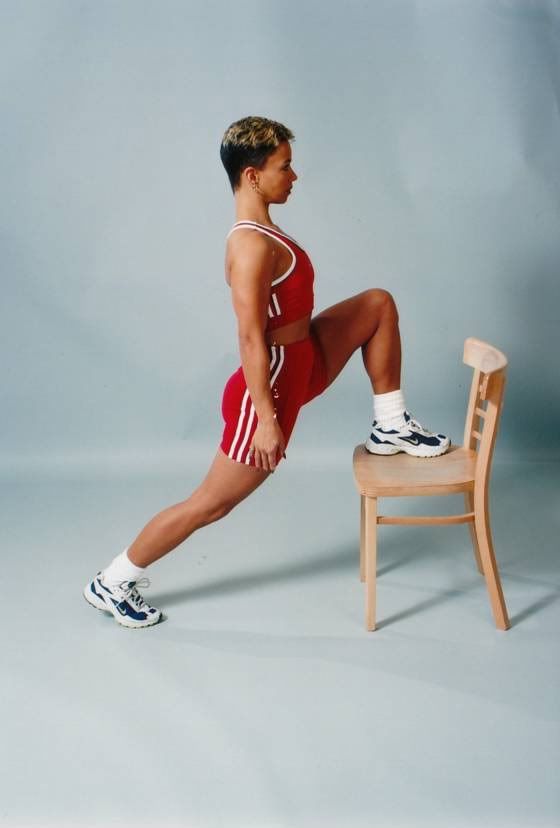
Step-Up Lunge

Wednesday, March 25, 2009

Fire in the Belly- Emotional Anatomy

Fire in the Belly

Emotional Anatomy of the Lower Abdomen


A truly inspiring person is often perceived as possessing passion with a purpose. Their energy comes from a place deep within. That place is an area above or around the navel.


This energy center in the body actually operates as though it has 3 channels. I haven’t figured out a cool name for this energy center, but what I have seen is a person who has a sense of freedom—there’s no “binding”, there is circulation, and there is energetic movement occurring around them. What you have is a person who is in their right livelihood making a contribution, feeling connected with the spirit, and also fully engaged in a cooperative life work, with other like-minded individuals.


The 3 channels seem to have one energy source, which will flow through one channel or the other. In an ideal and perfect world, you would have all these channels fully awake and fully energized and you’d be able to apply the energy in all directions at the same time. You can do that if your pelvis is flexible and free (different lecture).


The movement of your body and flexibility of your ribcage are what keep this energy grounded and circulating, ultimately manifesting themselves in some meaningful, tangible way.


The first channel, in no particular order of importance, is the spiritual channel. This is the part of a person that longs to have a deep connection with the divine. Yes, we say our heart yearns to be with our deity. We want to feel that connection. That desire to connect comes from right below the navel. It’s different from prana energy, which comes from the pelvis. It’s more like what the ayurvedic healers call kundalini energy. This energy taps you into your connection with Spirit. When a person feels most connected with Spirit, it’s almost as though they feel that God walks through their lives, in their bodies. It’s almost as though that person can feel the divine working through them as they go about their daily lives. When this channel is open and free, there is some spiritual energy that seems to perhaps guide and direct that person toward the places they can be most useful and make the greatest contribution. That’s the spiritual channel of this energy center.


You can awaken this center in yourself with a few exercises, one of which is the Step-Up Lunge.

Instructions:
1. Using a chair and starting off close enough as if you were going to sit, measure your stretch distance by standing with the back of your calves against the front of a chair.
2. Take one comfortable stride forward. Turn around in that spot to face the chair. Now, check to see that your back foot and toe are pointing straight ahead—not to the side.
3. Step one foot fully onto the lap of the chair. With your front foot flat in the chair, lean forward until the knee and the ankle are straight up and down.
4. Look down at your back foot. The heel should be at least one inch off the floor, with your weight balanced on the front arch of the foot. The heel should not be flat at this point. You should feel this stretch in front of your hip and perhaps the top middle of the “down” leg. You should not feel this in your calf at all. If you do feel it in the calf, bend your knee so that the focus point of this stretch shifts to the front of this hip.
Special Note: Check to make sure your torso is upright, not forward. When you have your arms hanging at your sides, do your best to be so upright that they hang behind your body’s midline or even behind where your hips are.

5. So you’re in position now. Breathe five times in your nose, out your open mouth—feeling the stretch on the front of your hip going down to the front middle of your leg.
6. After five breaths, pivot or wiggle your back foot a few inches farther back, to open the front of your hip joint even more. Keep the back foot straight, headed forward, and correct your front leg and body position if you need to.

7. Breathe five times. Again, in your nose—big—out your open mouth wide open first, then breathe out.
When you are done, use your front foot to push yourself out of the chair, and catch your balance. Then, walk around to recalibrate your body’s tension balance.


Living your life infused with Spirit flowing through you carries with it the responsibility of keeping your body healthy and whole, fluid and flexible.


In doing so, you will tap into a natural resource within yourself that will leave you with a sense of accomplishment, peace of mind, and connectedness with the divine.


We will continue this discussion by going into the 2nd channel of energy in our next blog.

Wednesday, December 3, 2008

Emotional Anatomy of the Neck and Chest

Heart and soul—the center of courage and self-love

The breastbone starting at the center point at the base or sternum—this is the area where bravery, courage, and pride tend to manifest themselves. What’s also there is self-love. You’ve heard—“Mary has a warm heart to do such a thing.” Or… “Barry has the courage to take on a big challenge in life.”— The energy of courage manifests itself in the ribcage right behind the sternum bone, sometimes referred to as the heart chakra.

By contrast, when a person has a depressed or compressed ribcage, that person decreases their capacity to experience not just self-love, but feeling cared about. Even though other people may care about them, one lowers their capacity for experiencing and feeling that love by closing the ribcage down. They limit their capacity to express caring and courage in life.

Here’s more: You will find that a person has a greater capacity for self-confidence if their ribcage is higher and fuller. As you go higher to the upper part of the breastbone you discover the part of the body that one holds the energy to stand up for one’s self. This is different from speaking up for yourself, which is higher, at the base of the throat, but standing up for one’s self. The energy of courageous compassion is what I’m talking about.

Picture a mama bear with her cubs and how protective she is over them. Imagine the unbridled fierceness that the mama bear has if some other predator or intruder gets near her cubs. She’ll kill that person, that other animal, to drive them away even if it means the cost of her life.

For you and me, this manifests itself in our willingness to take a stand for what we believe in for our, a cause, or for a person we really care about. That energy comes from this part of the ribcage—open it and you’ll expand. Compress it and you’ll be hesitant to speak, or stand, up for yourself, your loved ones, your livelihood, your cause.

The next area is just above the breastbone at what is referred to as the suprasternal notch, at the base of the throat. That is speaking up for one’s self.

When this area is open and free, you’ll be much more willing to say what’s on your mind, to express your truth, and you’ll be able to say it without hesitation. Certainly, tact and talent are part of how the delivery occurs, but the willingness to make the communication in the first place—that shows up at the base of the throat. Open it and you’ve got freedom. Close it and you’ll notice constriction and hesitation.

In fact, the chest and throat tend to close down when a person is making an uncomfortable communication. Imagine someone clearing their throat, coughing and facing down slightly. They’re trying to open this area so that their truth can come out. When this area is open and free, your message becomes much clearer, especially to yourself.

The ego gets stored in the neck. When the neck is rigid, short, pulled down, stiff, and pitched forward, the energy flow for that person gets constricted. When it’s constricted, it prevents the person from being realistic about who they are to themselves and to others. In the absence of a realistic self-view, people tend to paint a picture about themselves to camouflage the absence or confusion their self-esteem.

When you open this area and bring freedom back to your neck, not only your self-confidence, but also your self-perception is much more likely to be accurate, give you a sense of confidence, and one that is compatible with how other people actually perceive you. It’s likely to also complement how you fit into the universe you’ve built around yourself.

In conclusion: Self-love, self-confidence, courage, caring, and compassion are close cousins in the emotional body. The healthier you become, the more open and free your body will want to become. Today, make the commitment to stand up and speak up for yourself or someone or something you care about. You just might change the world!

Emotional Anatomy of the Face and Jaw

The face stores a wide variety of emotional energy. Stress, worry, joy, gladness, and passion—you can see it in a person’s face. What happens in a person’s history, or if the person doesn’t allow themselves to experience those feelings resulting from events, is, stress or something else builds up in particular muscles… Then you can see anger, un-cried tears, grief, stress. You can even “see” un-communicated thoughts when a person has pursed lips or clenches their teeth.

Anger and resentment, seething and vengefulness are stored in the jaws. Many of us know someone who seems angry most of the time. Look at their jaws. Are they tight? Bulging with veins? Short temper? Is that person overly reactive to the slightest provocation?.
The stress we store in our face and jaw can be harmful to us. Facial stress can age us prematurely. It can rob us of the sparkle in our smile, affect our speech and breathing, and send confusing messages to our friends and loved ones.
Many times, emotional stress can work the other way around as well. We can resolve a personal issue with a professional therapist. Sometimes, however, the person, or the negative energy from the issue may remain stored in the muscles of their body. So, in a sense, the emotions keep re-creating themselves because they haven’t been released from the body.
When a person is experiencing a Facial Reposturing® treatment, sometimes, a person may emit a tear when the facial muscles are stimulated and release latent emotional energy. Some people notice a dramatic and visible result when they come out of their Facial Reposturing treatment. They have a bigger, brighter smile that comes from the new freedom of movement they feel in their cheeks.

When you release the old tension patterns from a person’s face, what happens is the natural authentic self begins to shine and radiate from the person. Their smile looks more authentic. Their eyes are brighter. There’s a quiet confidence that comes to the countenance of a person’s face. Even if the person still has some unresolved issues—they come to a point when they, at least, no longer store it in their face.

There’s a natural, unforced mirth that shows in a person’s cheeks as a result of releasing the tension patterns that get stored in a person’s face. It becomes physically and structurally possible for them to experience authentic joy. Aliveness, peace of mind, radiance, and enthusiasm is the proof on the face of a person whose soul is free.

Introduction to “Journey Through Your Emotional Body” series

Different parts of the brain control and respond to different parts of the body. In a similar way, different parts of the body store and transmit different types of emotional energy.

Many of the phrases that exist in our language testify to the type of emotion that is stored in different parts of the body. Such as “pain in the neck” when someone is bothersome. “Weak in the knees” when a person feels like they have trouble confronting the truth, especially when it comes to an authority figure. “Shouldering responsibility” the shoulders happens to store authority. Or when someone has the guts to do something, courage comes up from the abdomen and moves through the chest into the center of bravery, courage and pride.

There are different aspects of our emotional-selves that deserve as much attention as we pay to being fit and looking good. Consider the energy required to heal your body when it is wounded or has a condition.

Starting at the top of the head, face and jaw, The “Journey Through Your Emotional Body” series will be an analysis based on observations from my clinical practice over 20 years and commentary from my clients and my discussions around each area.

Welcome to the world of Reposturing where the mind, body and sprit are considered as one. On Friday November 20th, look for “Heart and soul—the center of courage and self-love” the emotional anatomy of the neck and chest.

Tuesday, April 1, 2008

Organization Detox

Every spring, many of us start to look at our homes, garages, and automobiles to see what we can clean out, give away, or toss. There is this curious phenomenon that happens when people start to get organized. They start getting weird—and then they get frustrated. Organizing is a good thing. Why should there be stress around it?

Think of organization as detoxifying one's life. The whole process calls for equally detoxifying your mind and body. The process itself may even make you feel sick, tired, cranky or just a little “off”. Here's a basic principle in the physics of vitality & wholeness: “How organized your life is reflects how healthy your mind and body are.”

When you change one area of your life, you'll likely feel an innate drive to make changes in other areas too. They toss things they no longer need. Many of my clients suddenly notice a desire to get in shape, improve their diet or change relationship status with friends, associates and "significant others."

When you feel tired, unsettled and off-centered, it's your body's way of saying, "Slow down, I need to catch up with you and figure out where you put all the furniture, food and forks". If you don't give yourself time and space to get used to the new arrangement, that can give you a bad attitude & really stress you out.

You can avoid "flip-out-factor" by doing stress neutralizing activities such as getting a massage, taking a walk or doing a fun and familiar activity you already know how to do.
This will help your mind, body, and spirit the opportunity to re-synchronize quickly & safely.

I have worked with many professional organizers for myself and for my clients with great results. At the same time, I avoid the "flip-out factor" by scheduling myself to receive structure-improvement oriented bodywork, such as Reposturing Dynamics and message therapy.

For a professional organizer in your area, call The National Association of Professional Organizers (NAPO) at 856-380-6828. For a Reposturing Dynamics Practitioner, call 1-888-7POSTURE.

Wednesday, March 12, 2008

Thriving On Stress

Thriving On Stress

Every day, you live with the consequences of how you react to the stress in your life. Whether you realize it or not, your response is costing you (and your family, friends and business) dearly -- physically, emotionally, professionally and monetarily.

The American Heritage Dictionary, 3rd edition defines stress as:
"A stimulus or circumstance causing a disruptive or upsetting condition in response to external influences…capable of affecting physical health…characterized by increased heart rate,…blood pressure, muscular tension, irritability, and depression."

Stress is costing you time and money
The number of workers adversely affected by stress is rapidly increasing and may be costing employers more than $100 billion a year, according to the National Institute for Occupational Safety and Health. The American Institute of Stress puts the figure at $200-$300 billion a year.

After 24 years in the health and wellness industry, I have found a new definition:
Stress is your physical response to perceptions of life challenges you have.

Stress is not a "thing" by itself -- It is neither good nor bad on its own. Think of it like the instrument panel of an airplane. If a dial reading is too high or low, the airplane gets off balance. Regardless of the weather, the goal of the pilot is to fly the plane safely, to keep the instrument dials optimally balanced. Your job is similar. You must pilot yourself through the challenges of your life while keeping your "stress dials" as balanced as possible.

Stress, Self-Control and Self-Mastery
We need stress in order to live. Stress is a wake-up call, letting you know what area of your life needs work, development and attention. In the game of Self-Control and Self-Mastery, what stresses you out is probably where you personally need to grow.

Life Without Stress
How would life be, if there were no stress? Relationships would never happen. If they did, they would never grow, change or evolve. Work would always be the same--same sales, same customers, same service, same rules. Societies would not change or evolve. Even in the Stone Age, the wheel would have never been invented. Not the clock, not the automobile, not language or paper.

Most of us don’t want life completely without stress. Most of us would choose to be in relationships that grow. We would choose work that changes with market demands. We would want society to evolve and technology to be developed to improve our lives. We want stress to be part of our lives—we just need skills and boundaries to help us make stress an ally to gain self-control and mastery.

Life with Vitality and Self-Mastery
Living with vitality is taking control of our lives in every way. We are responsible for the happiness in our homes, the success in our careers, the peace in our minds, the enjoyment in our lifestyles, the health in our bodies, and the joy on our planet. We make good decisions that lead to quality in our lives. Living with vitality is having self control and life mastery. Almost everyone can achieve that.

Revive to Thrive
Thriving on stress to achieve vitality is like flexing a muscle. Building & developing muscle tone requires that you spend time and attention to pushing your muscles to their maximum ability and to resting, relaxing and nourishing them. Then it makes sense to revive your ability to thrive on stress by having a system of nurturing which restores your ability to handle a maximum amount of stress.

To thrive, you must recreate
Studies have shown that 62 percent of health club members go for the purpose of minimizing stress, and that number is growing daily. What my personal investigation has shown is that certain people seem to gravitate toward specific recreational activities consistently.

Many sales people tend to gravitate toward competitive activities (fast paced, high adrenaline) such as racquetball, tennis, basketball, kick boxing and drag racing. I have found that CEOs and general managers gravitated to strategy-dependent recreation, such as golf, billiards, tennis, marksmanship and chess.
Recreation is the KeyWhen we recreate or play, our "healthy" hormone levels return to normal. Furthermore, the part of us that we hold back in a stressful situation has a chance to "come out," express itself mentally, emotionally, psychologically and physically.

The Main Five Reasons why you want to use recreation to thrive on stress:
1) It’s usually easy to do
2) It’s fun to "play"
3) It provides balance -- Helps you "get a life!"
4) It gives you activities that help you spend quality time with friends & loved ones
5) It may add years to your life -- with quality


The Top Five Things you can do to neutralize the effects of stress--Almost Anytime
1-
Deep breathe & Do Nothing
How: Sit quietly, eyes closed. Breathe deeply--in through your nose, then out through your mouth. Breathe deeply 3-5 times then normally for one minute or more, without responding to your surroundings. Repeat.
Benefits: Sends oxygen to brain, nutrients to cells and helps clear your thoughts.

2- Drink ample amounts of water daily
How: Take your weight in pounds and cut in half and drink that many ounces of water per day (e.g., 150 lbs. =75 oz water). Key point: Don’t drink when eating, as the water dilutes your digestive juices. If you feel the need for water while eating, you may be eating too quickly for your digestive juices to flow. If it is because of consumption of salty foods, drink the water anyway if your body craves it. Add two cups of water to every one cup of coffee, alcohol or soda.
Benefits: Makes body fluids flow better, gives more energy and increases flow; helps you sleep; organs work better; helps body release toxins and waste better; improves body’s cooling system; lowers blood pressure.

3-
Napping
How: As little as 5 minutes --- no maximum (whatever your body says it needs, if time allows); Some people sleep in sets of two 4-hour naps every day. Go to a place you can rest, cover eyes or turn off lights (no light) and give yourself permission to go to sleep, set alarm clock (put across room if necessary so you get up when you need to).
Benefits: Allows body to get deep sleep which has double or triple benefit of just closing or resting your eyes. Accelerates body’s restorative process. Adds an extra half hour of productive mental energy per 5 minutes of nap time. Lowers blood pressure.

4-
Stretching
How: Nice upper body stretch --- lock your thumbs and put arms
above head way up high, don’t bend back; reach arms down and back behind and reach up again (shoulder circles) --- backwards swimming stretch.
Benefits: Helps pump lymphatic system; improves immune system function; helps pump body fluids; stimulates circulation of blood; helps lift rib cage so you take more air in per breath.

5-
Play / have fun
How: Always have 2 or 3 things you can do with no warm-up and no prep (putting darts, Frisbee in parking lot--fly across, chase, repeat, Nerf basketball, reading "fun" stuff -- anything you don’t have to calculate or think about).
Benefits: Gives mind a break from routine and time to refresh mental sharpness.


Thriving on Stress: The ongoing game of Achieving VitalityAchieving optimum vitality and peace of mind is the ultimate goal in the ongoing game of thriving on stress. However, by understanding what your personal challenges are, you can start to react differently to situations you perceive as stressful, then you can be at peace with yourself. But achieving vitality is not easy. It is personally challenging. It requires perseverance. The benefits far outweigh the costs. I believe the game can be enjoyable as well as personally rewarding.


Excerpted from "Thriving On Stress"—A report on how you can use Recreation to neutralize the effects of stress. To order the full report, click here:

[INSERT LINK]

Thursday, January 31, 2008

Craving Your Way to Power with Food

Every year, I read and hear about “this year’s diet”. The name of the diet changes from year to year, but the intent is the same: You want to lose weight, or detoxify your system—And you are willing to sacrifice pleasure and flavor to reach your goals. Sure enough, last year, three weeks after you started “the diet”, you were back to your old ways—only then you felt guilty about it. Not to worry though. After a few bites of your favorite “guilty pleasure” comfort food, the feelings of failure and inadequacy just faded away. Oh well, there’s always next year.

What happened? Although you had good intentions, your body’s innate nutritional and emotional needs are being managed by your hormones and endocrine glands. You cannot quickly change the tastes and textures your body naturally craves. The secret of success in achieving your health goals AND mastering the process lies in knowing what your body is truly craving and satisfying it immediately.

Yes, you can have your cake and eat it without guilt—if you satisfy the real cravings you have soon enough. What is unique about the Craving Category approach is, it encourages you to listen to your body and put a time, taste and texture to everything you eat. That's the way the body works, that's the way the mind works. By taking charge of your cravings, your life will run better. It will eliminate frustration and you will be happier and more at peace with yourself.

How to find your Craving Categories
Step 1
On a two-column page or spreadsheet, make a list of your favorite foods of all time, and a list of foods you eat on any two or three days (it is not necessary that the days be consecutive). For example: Bacon, eggs, an apple, a chicken sandwich.
Step 2
Next to each food item, jot down a brief description of the taste and texture of that food (or how you think about that food). For example: An apple is crisp, semi‑sweet, juicy, easy to eat, and it's not messy.
Step 3
Take your list of tastes, textures and descriptions and write the list in one column of a second two-column page or the 3rd column of a spreadsheet. For example: 1-Crisp, 2-Semi‑sweet, 3-juicy, 4-easy to eat, not messy.
Step 4
In the second column of that second page, make a list of all the foods you can think of that fit in each category. Foods that are crisp: Apple, grapes, crackers, pears, watermelon, toast… Foods that are easy to eat--not messy: Potato chips, grapes, apples… Foods that are semi-sweet: Dark chocolate, cantaloupe, pear salad.
Step 5
With your craving categories, rearrange your list from most to least-healthy. Crisp: Apple, pear, grape, watermelon, toast, crackers… Easy-to-Eat—Not messy: Apple, grape, potato chips… Semi-sweet: Pear salad, cantaloupe, dark chocolate…

We've got one list of categories that we extrapolated from our original food list, and we may have 10, 15, 20, 30 or 50 categories of food that we select from throughout our lives that we can put all the food we eat into. We've got another list of all the foods we like. What we should have done by now is take the food we like and put category designations for each food. What about the next food? How would you categorize a hamburger?

By listing foods this way, you will be able to develop your shopping list and your everyday list of foods easily. Let's say you're going over to someone's house, and you want to help them prepare a great meal for you. Say, "These are the foods that I love… Can you make something kind of savory, sweet and chewy, but not greasy?". Shazzamm! Barbecue grilled chicken, marinated overnight in the family secret-recipe of sea salt, molasses, olive oil and Jerk seasoning, slow cooked to perfection! Now THAT’S what I’m TALKIN’ about!

You can post your list with a magnet on the side of your refrigerator, so when you go shopping, you can use it as a guideline for yourself seasonally, or you can have someone else make up the shopping list, because they know what your categories are. For my clients, Ed and Rosalie, she does the shopping, and, because she has a list of Ed's categories, she can just pull Ed's craving category list out and take it shopping with her to make sure that he has food at home in each of his categories. Because she makes the selection, she's going to also pick the healthiest foods for each of his categories.

Here's another way to consider your Craving Categories: Roxanne has two lists from which she selects her food. One of her headings is, "Reward Foods" and " Comfort Foods That Make Me Feel Good About Myself”. Her healthy shopping strategy is to always shop from the second list. On particularly stressful days, she will stop and pick up a small piece of her favorite gourmet chocolate, which is on her “Comfort Foods” list. She never keeps more than a small portion of comfort food at home.

Take a look at all your Craving Categories and, based on the information that you have been gleaning from your nutrition books, you can begin to rearrange the order of the foods on your lists. You can rearrange them according to how easy each food is to get. Put the easy ones at the top and the logistically cumbersome things to get at the bottom of the list. You can also categorize them from the most healthy to the least healthy.

The foods I eat during the week are different from what I eat on the weekends. During the week, I'm on the go and I need to eat foods that are easy to prepare. On the weekend, I eat more sit‑down meals because I have an hour or so to eat. When I go out for fine dining, I ask the server what’s on the menu that is kind of savory, sweet and chewy, but not greasy. Then I let them surprise me with their interpretation.

You can categorize foods in whatever way is significant to you. You can make up a list for every part of the country you're in. If you're in the South and you like gumbo or some other set of southern dishes, they fit in different categories for you, or maybe they fit in the same categories that you can only use while you're in another country. You can carry your list or have it in mind as you order your food, shop or when someone else will prepare food for you.


Use your Craving Categories list until you have a working command over the food selection process. Soon, you'll find that you can truly have your cake and eat it too. Bon Appétit! ˜˜˜--Aaron Parnell

Thursday, November 8, 2007

Reposturing Dynamics-- New Prices for the New Year

The time has come. As Reposturing continues to grow, it's incumbent on me to extend the opportunity to offer Reposturing services to more and more practitioners. At the Vitality Center, you'll meet Sharon Caren who has been working with me for ten years, having taken a thousand hours of training, assisting, and study with me. You'll also meet Hensl, who has completed an intensive study of Reposturing series for every area of the body and is also certified as a Reposturing Fitness Trainer.

What this means is, I will no longer be taking new clients after December 31, 2007, except at a higher rate and a new service structure. Clients who begin with me between now and the end of December, will be served at the current rates throughout their time with me. Your rates and service structure will not change after the beginning of the year.

Starting January 1, 2008, sessions for new clients will be 90-minutes, including a 45-50 minute treatment of Reposturing followed by a 30-minute relaxing massage immediately afterward.
The 90-minute session with me will be $400. Initial sessions will be 2 hours and $600.

Meanwhile, new clients who begin after the New Year will have the opportunity to be served by either Hensl at $100 or Sharon at $120 per session.

So if you want to work with me personally or you have been thinking about sharing Reposturing with your friends and associates, act now to book your first session before December 20, 2007.

Minimizing Job Stress Before It's Too Late

Minimizing Job Stress Before It’s Too Late

Here you are, minding your own business, doing a great job, then someone asks you to perform what amounts to a professional miracle. They have no idea that what they want will require the [insert your job here] equivalent of leaping through flaming hoops, doing backward flips while juggling three apples and eating one of them in mid-air.

The good news is, you come through. You make it work and you deliver the goods, on time and just a little over budget. The "not so good" news is that, just as you're about to exhale and recover from the job-gymnastics routine, three other people call or come over to you and say: "Hey, you're pretty good! Can you come over and do that for me, too?" Only, I need it a little sooner and a lot cheaper."

There is a phrase in Spanish that loosely translates: "By mistake, I killed a dog once-- Now they call me a dog killer." They don't have a phrase for when you work a miracle once. However, if you find yourself in a quandary of how to think about this, Lao-Tzu had a phrase: "If it doesn't kill you first, it will make you stronger."

If you are time-crunched and have to go work another miracle right now, the quick-view, bottom line solution is, pick one of the following choices:
1) Do it superbly, name your price, including number of days off to recover and recharge.
2) Decline it, just say no, you can't do it under any circumstances and maintain personal and professional integrity.
3) Deflect it; don't automatically take their bait. This is to make them look good - not you!
Or
4) Let THEM delegate it to the three other people who should be doing it, even though they aren't as good at it as you are.
Thanks, it's been great. Call me if I can be of any support in the mind/body department. See ya--

If you have a little time, let’s have a deeper discussion about this phenomenon of being a miracle worker.

Deciding to Do the Miracle
Most of us like to do our best work every time, no matter how much time and money it takes. However, often, we find ourselves challenged by time, money, talent, technology or all of it. Here is where you say to yourself, "This is an opportunity for me to grow and learn. Working through this will get me closer to self-mastery. And that's good.

The key to this step is: Just do it –but on your terms, at your price. Then reward yourself for what you learned and accomplished. Take quiet time to self-reflect, for it is in the quiet spaces that the inner self recharges and re-calibrates itself for great contribution next time.

Declining Opportunity.
Don’t do it. If you're having trouble with this part, it may imply that you're new in your career and you're not sure if this one time is going to be the opportunity that could make or break your career, reputation or both. The bottom line is "just say no, can't do it. You don't even have to give a reason why.

If your commitment is to excellence in your work or your job, to say "yes" to this opportunity is also a vote "yes" for mediocrity at your expense. The more you exercise the "no" muscle, the better you will get at it.

Deflecting Opportunity.
Your colleague comes to you and begins to moan and whine about how they're so busy and so swamped, or so professionally challenged that their life is being made miserable because they don't have what it takes to do as good a job as you could do in the amount of time they have. Woe is them…..

That's your cue to say, "Aw, gee, that's too bad. I'm sure that something will work out for you. Thanks for the conversation. See ya later." This opportunity is to make them (your whiner) look good. It's rarely a good clean chance to make you look good no matter how much of a hero they make it sound like you will be if you rescue them our of their predicament.

Lastly, Let THEM delegate this project to the three other people who should be doing this job, even though those other people are not as good as you are or as experienced as you are. Don't make the mistake of agreeing to make sure it gets done, which only means that you have now accepted work that got dumped on you that you either have to do poorly at your expense or delegate it.

Consider the possibility that the reason why more opportunities exist is so more people can take advantage of them, not so that highly competent people can be taken advantage of. If you are a miracle worker, when you do say "yes," make sure it's on your terms for doing excellent work, including your requests for preparation time, ample talent & budget resources, time to do the job, and the opportunity to recover and rejuvenate yourself after a job well done.